Inside DEI - Luís Rodrigues
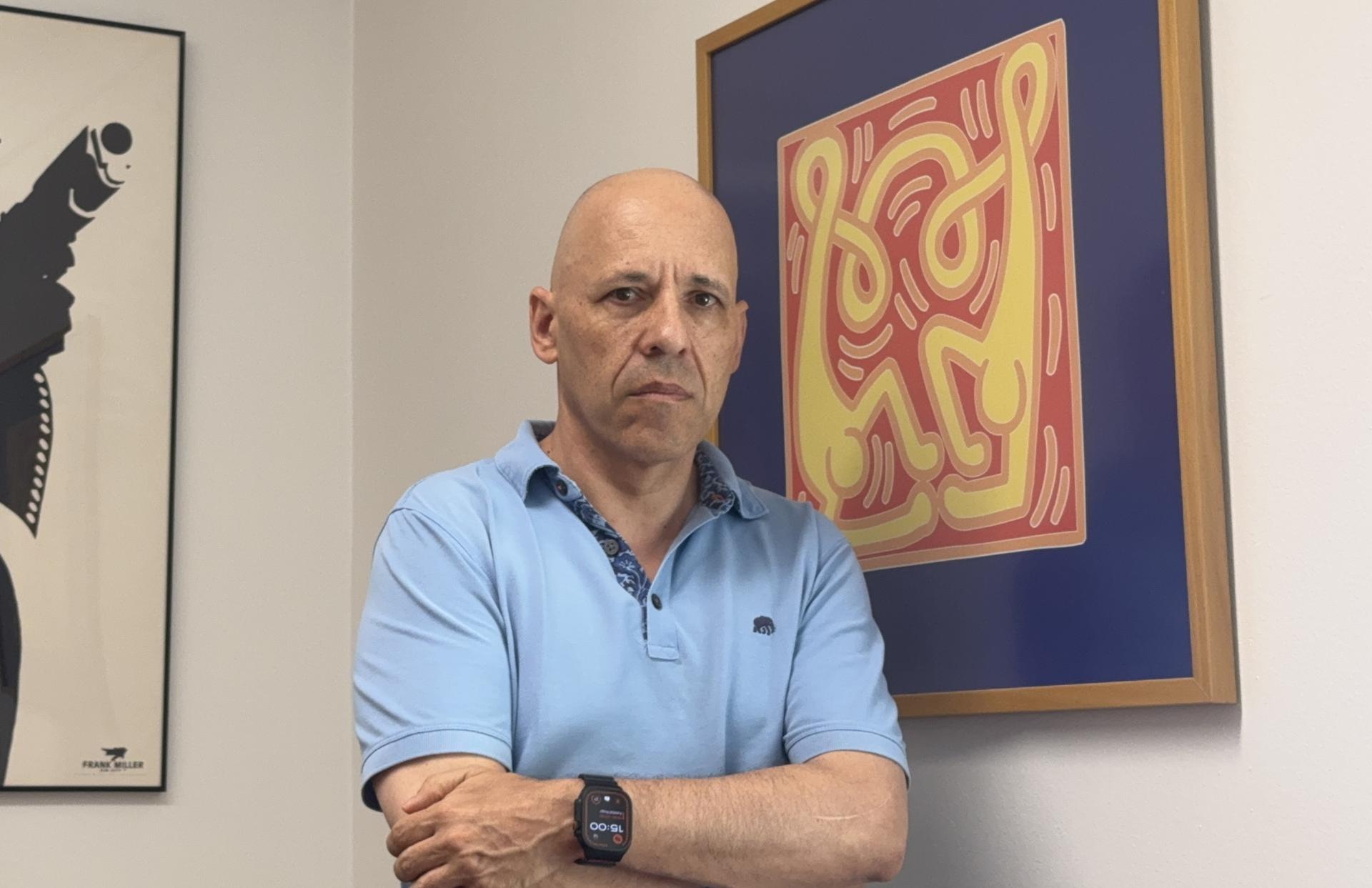
In this edition of Inside DEI, we will get to know Professor Luís Rodrigues a little better.
- Tell us a bit about yourself and your journey at Técnico.
In secondary school I was very fond of physics and mathematics, so coming to IST to pursue my undergraduate degree was a natural choice. That said, I had no idea which branch of engineering interested me the most, and I believe the only reason I chose Electrical Engineering was because it was my father's profession. Unfortunately, the programme failed to inspire me, and I simply drifted through it, not with distinction, but without major difficulties either, while devoting myself to extracurricular activities, such as organising film screenings through the AEIST.
This attitude changed during my final-year project, thanks to a fascinating topic (developing an XNS protocol stack from scratch, Xerox's proprietary alternative to TCP/IP) and to a group of office colleagues who guided me, most notably Nuno Guimarães and Paulo Guedes, both of whom would later become faculty members at IST. I thoroughly enjoyed that project, and when Alves Marques invited me to stay and work on a European research project and later pursue a master's degree, I did not hesitate (at the time, the master's programme only opened every two years). Working on that European project under the supervision of Paulo Veríssimo exceeded all my expectations. It had a very strong research component, and I had the opportunity to begin writing scientific papers and presenting at international conferences. They were incredibly stimulating years. At the time, Portugal's presence at distributed systems conferences was minimal, and I found myself in a sort of friendly competition to see at how many conferences we could be the first to publish research carried out in Portugal. In that context, continuing on to a PhD was the natural next step.
Shortly after completing my PhD, an opportunity arose to join the Faculty of Sciences, which at the time was looking to strengthen the systems component of its degree programme. I spent ten years there, and it was an immensely rewarding experience. There was a great deal to be done, and I had the opportunity to create and teach many new courses, establish a research group from scratch, help found a laboratory (LASIGE), and serve in several management roles, including Head of Department. In 2007, I applied for a Full Professor position at DEI and returned to IST. By then, there was already an excellent team in my field, which has continued to grow over the years through the recruitment of outstanding researchers. Talented faculty and exceptional students have helped build a leading research group in distributed systems.
- What does your teaching work currently consist of?
At DEI, I have taught several courses, all in the field of computer systems, including Operating Systems, Computer Networks, Distributed Systems, Distributed Fault Tolerance, and Design and Implementation of Distributed Applications (DAD), as well as some doctoral-level courses. Over the past two years, I’ve had the opportunity to teach DAD in an immersive format: I teach both theory and practical classes at Alameda and Tagus. It’s 23 hours a week, which is brutal, but it allows me to get to know the students better and has turned out to be a really fun experience.
- And in research?
I continue to work on distributed systems, fault tolerance, and, in recent years, also in the field of cybersecurity. Although artificial intelligence is the hot topic right now, distributed systems are essential for training models and performing inference securely, efficiently, and at scale.
- Which projects from your career would you highlight? For example, the most inspiring, innovative, or impactful ones.
As I mentioned earlier, the first european project I worked on was the most inspiring, as it led me to a career I had never imagined before. Later, while at FCUL, I worked on epidemic spread models with two brilliant students (José Pereira and João Leitão, who are now professors at the University of Minho and FCT UNL, respectively). This work resulted in several protocols that were subsequently adopted (and adapted) by the industry, particularly in blockchain systems.
- What do you enjoy most about your day-to-day life at Técnico?
At Técnico, we have excellent students, and I’ve been fortunate enough to mentor some of the best. It’s very inspiring, because they’re ambitious students who bring a lot of enthusiasm and many new ideas. The research group I’m part of is exceptional. It’s highly skilled, and there’s a great spirit of mutual support.
- Who is Luís outside Técnico?
I like watching TV shows and listening to music. I also like board games and video games. I have a Cinemateca membership card, number 11, but I don’t go to the Cinemateca as often as I should. I swim fairly irregularly and without much enthusiasm; I think I get more exercise walking to the pool than I do actually swimming.
(image: Luís Rodrigues)